Your 2–4 Week Plan to Regain Muscle After a Break
Get back in shape with a workout plan that restores muscle and strength while keeping soreness low and recovery on track.



Key Takeaways
- Your comeback takes 2 to 4 weeks when you build training stress gradually.
- Use 50 to 60% of your old max and leave 5 reps in reserve on compound lifts.
- Train each muscle twice weekly with 7 to 10 sets before adding more volume.
Try This Today
✔ Write down your first two weeks before you train: use two sets per exercise, keep compound lifts at RPE 5 or lower, and do not chase your old numbers.
Want to rebuild muscle and strength fast without digging yourself into a recovery hole?
In this expert review, we analyze, critique, and expand on Jeff Nippard's approach to getting your gains back after a training break. The core idea is simple: come back hard enough to make progress, but not so hard that soreness and fatigue stop you cold.
What makes this review different?
- Carefully reviewed training guidance with practical guardrails for your return.
- Little-known ways to control soreness while getting your strength back quickly.
- A complete two-day workout plan based on a gradual bridge back to normal training.
Why should you listen to us? Our articles are reviewed by exercise scientists with PhDs from top universities and 60+ years of combined training experience. We combine serious academic credentials with decades of practical training experience to give you science-backed advice you can trust. We've published 300+ articles so far.
Keep reading and use this return-to-training plan to get more muscle, less fat, and a better physique without rushing the process.
Related:
- How Often Should You Train for Hypertrophy?
- Progressive Overload Training Program: Build Muscle and Strength
- How to Deload for Muscle Growth and Strength
In a Nutshell: Rebuilding Your Gains
Your first job is not to prove how strong you were. Your first job is to give your body a manageable training signal it can recover from.
You can rebuild lost muscle much faster than you built it the first time. Start compounds at 50 to 60% of your former one-rep max, use 7 to 10 hard sets per body part weekly, and hit each muscle twice per week.
After one or two intro weeks, gradually add load and sets as soreness falls and performance improves. Stay patient for a few weeks, and you can get rolling again fast.
Key Concepts
- Muscle memory: Your body can rebuild previously held muscle and strength faster than brand-new tissue.
- Stimulus to fatigue ratio: Pick exercises that train the target muscle well without beating you up.
- Bridge phase: Use a 2 to 4 week ramp from light practice work to normal progressive training.
Build the Right Stimulus, Not the Biggest One
The mistake after a layoff is easy to understand. You feel flat. You miss your old lifts. So you walk in ready to jack your volume right back to 20 sets per week and take every set to failure.
That sounds tough. It also usually backfires.
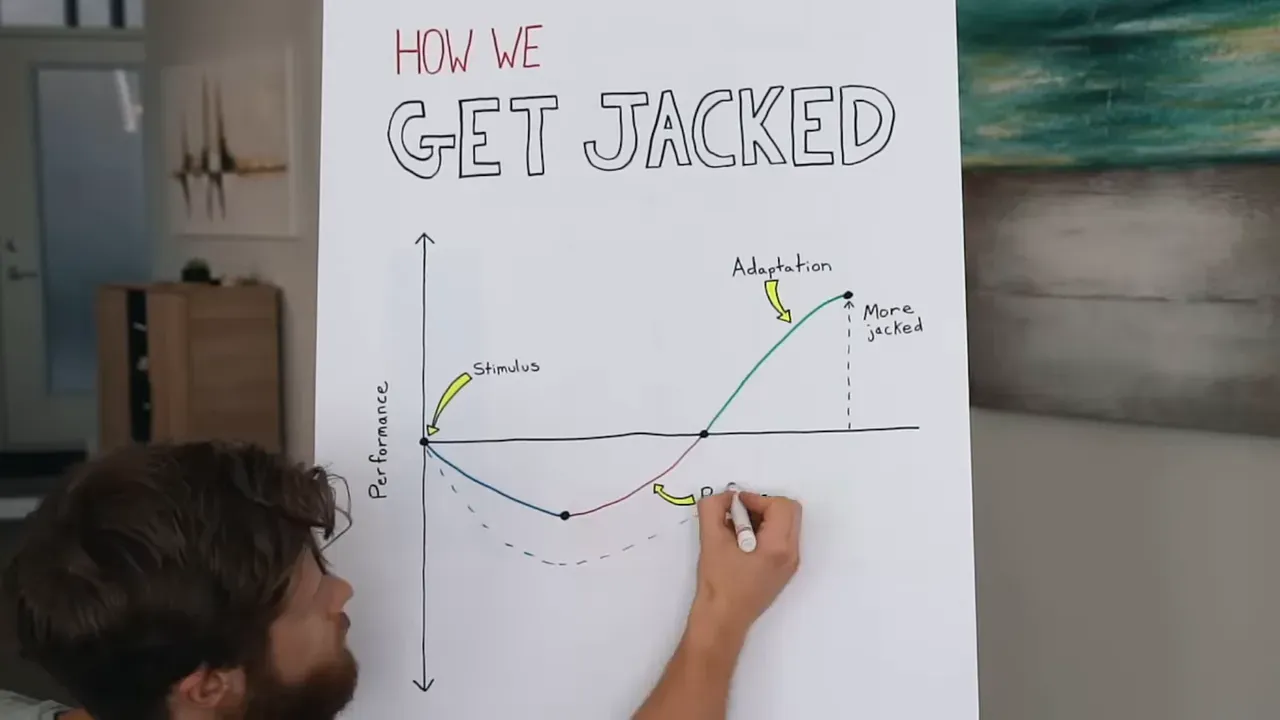
Building muscle and strength requires two things. You need a training stimulus, then you need recovery from that stimulus. The recovery is where the positive adaptation happens. If you increase the stress side too fast while your recovery capacity is down, you can do more work and still make slower progress.
Use Muscle Memory, But Do Not Abuse It
A training break does not erase your history. Lost muscle is generally easier to regain than new muscle is to build. That is the muscle memory effect, and it gives your comeback real momentum.
That does not mean you are invincible. It means a moderate dose of good training can work very well. You do not need a brutal first week to kick-start growth. You need repeatable work that lets you train again soon.
Write your comeback plan before the first session. A written plan protects you from your own excitement. Freestyling makes it far too easy to add an extra set here, turn a warm-up into a max-out there, and turn a productive week into a week of limping around sore.
Expect Strength Loss and Check Your Ego
If you have been away for more than two or three weeks, expect some strength loss. The longer the layoff, the more likely your old weights will feel awkward at first. Strength is partly a skill. Like shooting a basketball after months away, the pattern needs practice before it feels smooth again.
Forget the old numbers for now. Your current ability is your new starting point. Log every workout during those first weeks. You will often see fast progress simply because your nervous system is re-learning the movement patterns.
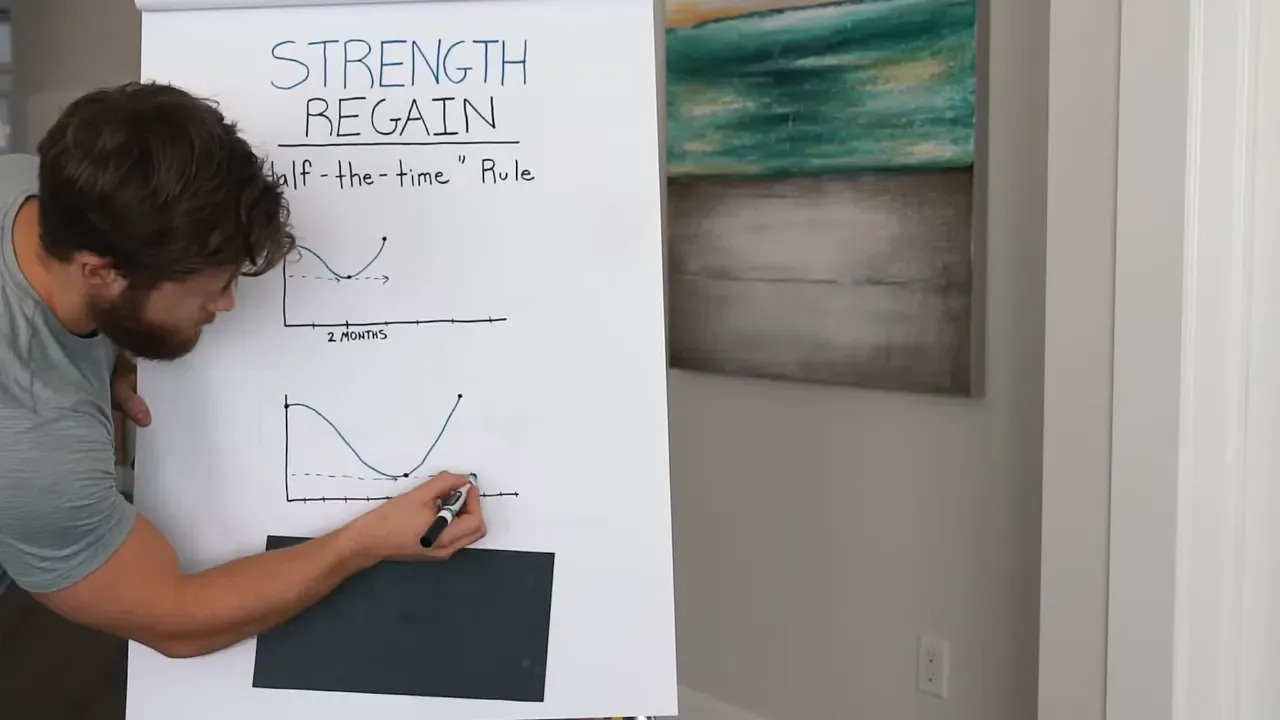
A useful rough guideline is the half-the-time rule: if you took two months away, you might regain most strength in about one month. If you took six months away, it may take closer to three months. It is only a rough rule, not a promise, and it becomes less useful with very long layoffs.
Choose Exercises That Let You Recover
Soreness is not a badge of honor on a comeback program. It does not add anything special to hypertrophy. It can reduce performance, make the next workout worse, and cut into the recovery you need to build your physique back up.
Favor High-Return Exercises
Start with movements that give you a strong muscular feel without leaving you wrecked for days. Machines and cables are useful here because they are often easier to control and tend to create less overall fatigue than free-weight versions of the same pattern.
This is not an excuse to avoid squats, deadlifts, and presses forever. Those lifts can be part of a strong plan. Just bring them back in gradually. Compound movements deliver a lot of stimulus, but they also create a lot of fatigue when you are not conditioned to them.
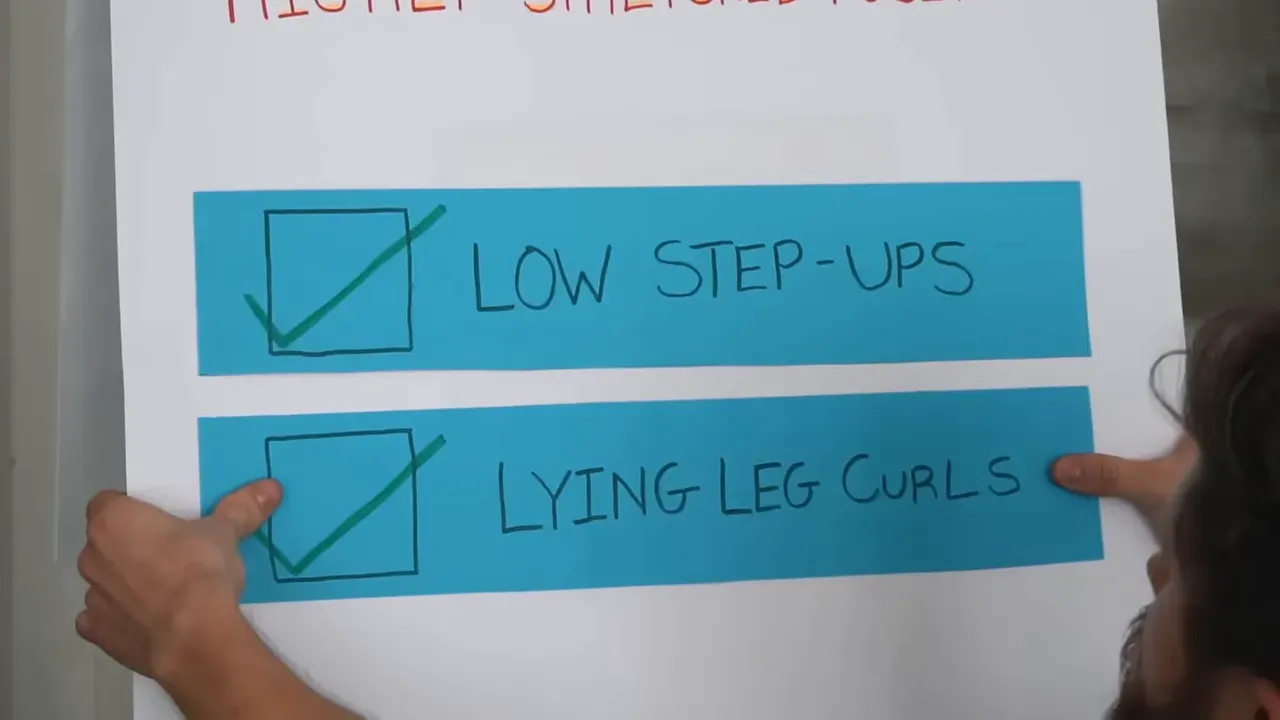
It also makes sense to avoid movements that load a muscle hard in a stretched position during the first phase. Walking lunges and Romanian deadlifts are good exercises, but they can create a lot of soreness when you are detrained. You can train the same areas with less recovery cost using options like low step-ups and lying leg curls.
Make Your Own Exercise List
Think through the exercises that suit you. The right choice is not always the exercise that looks best on paper. It is often the movement you can load steadily, feel in the target muscle, and recover from by your next session.
- Choose stable pressing and rowing variations if free weights feel rusty.
- Use machines and cables for extra volume while you recondition.
- Keep technical compound lifts light until they feel natural again.
- Cut movements that create severe soreness, not because they are bad, but because they are not the best fit right now.
If soreness is holding your training back, you may also benefit from this guide on muscle damage and hypertrophy. More soreness is not automatically more growth.
Use a Two-Phase Bridge Back to Normal Training
Do not jump straight into the program you used before the break. Build a bridge to it. The bridge has an intro phase lasting one or two weeks, followed by a transition phase lasting another one or two weeks. The longer your layoff, the longer your bridge should be.
Intro Phase: Weeks 1 and 2
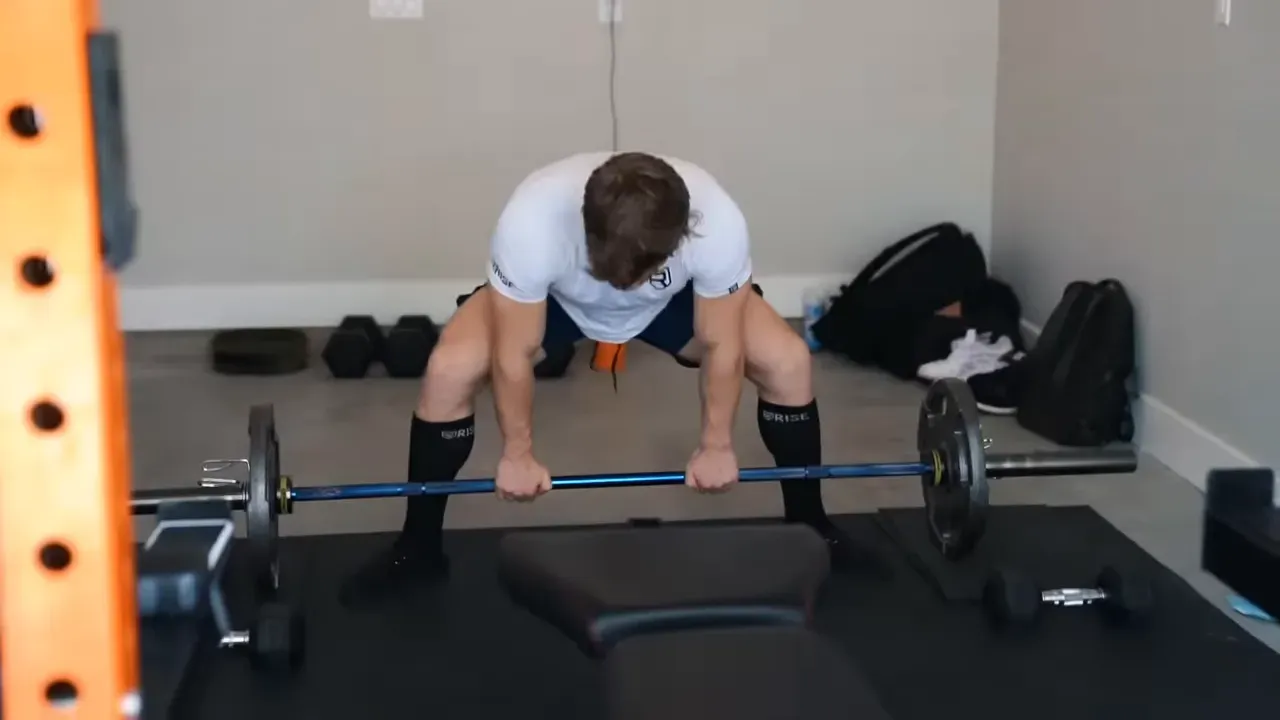
The intro phase is about re-learning. Your brain and body need to coordinate again. On compound lifts, keep the loads light and make clean reps the priority.
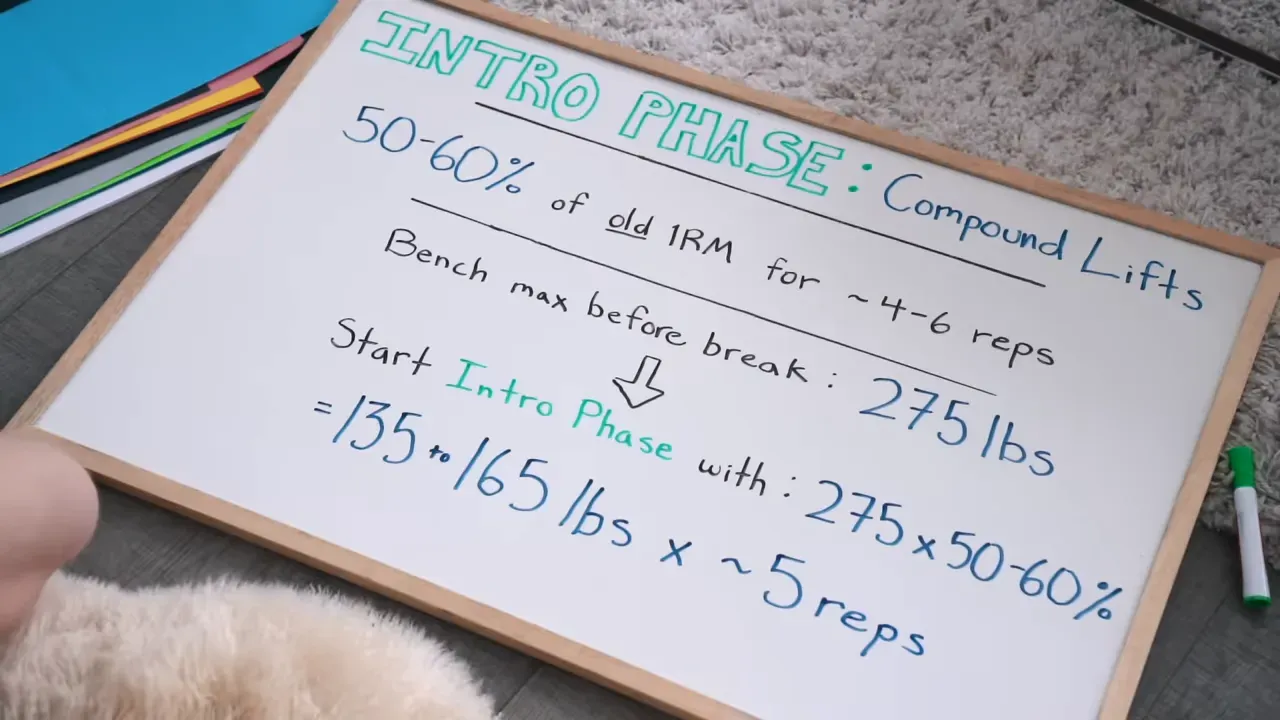
Use an RPE of 5 or lower for squats, presses, and deadlifts. In plain terms, stop with at least five reps left in the tank. A reasonable start is 50 to 60% of your old one-rep max for two sets of four to six reps.
If your old bench press max was 275 pounds, this means starting around 135 to 165 pounds for two sets of five. That may feel light. Good. It is supposed to. You are rebuilding skill, tolerance, and confidence, not testing your limits.
Isolation exercises can be a little harder. Use roughly RPE 7 or 8, but still avoid failure. Focus on getting a good contraction, a good pump, and a feel for the muscle again.
For volume, begin around 7 to 10 sets per body part per week. If you previously did three or four sets of an exercise, reduce that to two or three. This is enough work to grow while you regain your ability to recover.
Train each muscle about twice per week. Once per week does not give you much movement practice. More than two or three times weekly can be hard to recover from early on. An upper and lower split performed four days weekly works well. A push, pull, legs split performed six days weekly can also work if you have the time and recover well.
Transition Phase: Weeks 3 and 4
Once soreness is dropping and you feel better between sessions, start turning the dials up. Raise compound lifts to RPE 6 or 7. Raise isolation work to RPE 8 or 9 if you are recovering well. You are still not looking to grind ugly reps.
Add a set gradually. For example, move from two work sets to three on exercises you want to emphasize. Add load in small jumps. When the bridge ends, you can return to normal progressive training.
For many lifters, simple linear progression will work beautifully for the next month or two. Add roughly 5 to 20 pounds from week to week when the lift and recovery support it. When progress finally slows, then you can adjust volume, intensity, frequency, and exercise selection.
Two-Day Comeback Bridge Plan
This short upper and lower program is based on the low-soreness, controlled-RPE bridge approach. Alternate the two sessions four days per week, such as Monday, Tuesday, Thursday, and Friday. Keep every rep clean.
Program Overview
- Ideal for: Lifters returning after several weeks or months away from consistent training.
- Equipment needed: Barbell, bench, cable station or machines, dumbbells, and leg curl machine if available.
- Schedule: Four sessions per week, with each muscle trained twice weekly.
- Duration: Two weeks for the intro phase, then one or two transition weeks.
Workout
- Week 1: Use the low end of the load range and two sets per movement.
- Week 2: Keep the same sets and add a small amount of weight only if technique stays sharp.
- Weeks 3 and 4: Add a third set to selected movements and move toward the stated transition RPE.
Day 1: Upper Body
| Exercises | Sets | Reps | Rest |
|---|---|---|---|
| Barbell Bench Press | 2 to 3 | 4 to 6 | 2 to 3 minutes |
| Chest-Supported Row | 2 to 3 | 6 to 10 | 2 minutes |
| Machine Shoulder Press | 2 | 8 to 12 | 90 seconds |
| Cable Pulldown | 2 | 8 to 12 | 90 seconds |
| Cable Curl | 2 | 10 to 15 | 60 to 90 seconds |
| Cable Pressdown | 2 | 10 to 15 | 60 to 90 seconds |
Pro Tips
- Keep bench press at RPE 5 or lower during the intro phase.
- Use RPE 7 or 8 on curls and pressdowns, never failure.
- Use a machine press if your shoulders or elbows feel beat up.
- Record every load, set, and rep so progress is obvious.
Day 2: Lower Body
| Exercises | Sets | Reps | Rest |
|---|---|---|---|
| Squat or Leg Press | 2 to 3 | 4 to 6 or 8 to 10 | 2 to 3 minutes |
| Low Step-Up | 2 | 8 to 10 per leg | 90 seconds |
| Lying Leg Curl | 2 to 3 | 10 to 15 | 90 seconds |
| Leg Extension | 2 | 10 to 15 | 60 to 90 seconds |
| Standing Calf Raise | 2 | 10 to 15 | 60 to 90 seconds |
Pro Tips
- Keep squats light enough that every rep feels like practice.
- Skip walking lunges and Romanian deadlifts during the first phase if they make you very sore.
- Add a third set to leg curls or leg press only when you recover well.
- Do not confuse soreness with productive training.
Notes on Program Execution
- Use the intro RPE targets for one or two weeks, based on the length of your break.
- Only increase weight or sets when your soreness is decreasing and your performance is improving.
- Do not test a one-rep max during the bridge.
- If a movement irritates a joint or causes unusual pain, replace it with a more comfortable variation.
- Once the bridge is complete, return to progressive overload one small jump at a time.
Want to automate workouts like that and more? Put your progress on autopilot with Dr. Muscle AI.
Expert Corner: Proven Strategies & Hidden Gems
Practical Applications
- Set a recovery ceiling: During your first seven days back, end sessions feeling like you could have done more. If soreness disrupts your next workout, reduce the next exposure by one set per affected muscle group.
- Use former maxes only as reference points: Calculate 50 to 60% from an old one-rep max, then adjust down if bar speed, control, or confidence is poor. A precise number is less useful than an appropriate effort level.
- Build frequency before volume: Train a muscle twice weekly before you pile all your work into one long session. This provides repeated practice while spreading fatigue across the week.
- Prioritize stable exercise options: Put machines, cables, chest-supported rows, leg presses, and leg curls at the center of early training. Reintroduce high-fatigue free-weight work after tolerance improves.
- Progress one variable at a time: Add either a small load increase or one set, not both at once. This makes it easier to identify why recovery changed.
Examples:
- If you used to do four bench press sets, begin with two sets of five at 50 to 60% of your prior max, leaving five reps in reserve.
- If two sets of leg curls leave you only mildly sore and ready to train again, add a third set during the transition phase rather than adding failure reps.
Fact-Check of Key Points
- “The only other way to experience newbie gains twice is to stop lifting for a while and then start again.” This is memorable language, but it is an oversimplification. Regaining prior muscle can be unusually fast, yet the rate still depends on the length of the break, your nutrition, training history, and how much muscle was actually lost.
- “You can probably expect it to take about half the time you took off to get most of it back.” This is a useful rough planning tool, not a dependable timeline. Treat it as a starting expectation and use weekly training performance and recovery to guide decisions.
- “Soreness is the devil on a comeback program.” The main point is sound: severe soreness can impair subsequent training. However, mild soreness can occur even with an intelligent program and does not automatically mean the plan failed.
- “You really don't need heavy loads to rebuild strength and size at all.” Early in a comeback, lighter loads can be highly effective and are often appropriate. Over time, though, progressively heavier loading remains valuable for rebuilding specific strength and maintaining a broad training stimulus.
- “Hitting each muscle twice per week is the sweet spot.” Twice weekly is a practical recommendation for this bridge because it balances practice and recovery. It is not the only effective frequency, especially when total weekly volume and exercise selection differ.
More Little-Known Tips for Rebuilding Muscle After a Training Break
- Keep the same core exercises for the whole bridge. Too much exercise swapping makes it harder to assess progress and can create new soreness.
- Start the session with the movement you most want to re-learn. Fresh practice is better practice.
- Leave the gym with a little in reserve. The best comeback sessions make the next session possible.
- Use your logbook as an objective check. If loads or reps rise while soreness trends down, your plan is working.
- Save advanced intensity methods for later. Drop sets, rest-pause work, and frequent failure training add fatigue when you least need it.
Common Mistakes With Returning to Training and How to Fix Them
- Mistake: Starting at your old weekly set count. Fix: Begin around 7 to 10 sets per body part per week, then add work gradually.
- Mistake: Treating the first week as a strength test. Fix: Treat it as movement practice at RPE 5 or lower for compounds.
- Mistake: Chasing soreness. Fix: Choose exercises that provide a good local training effect without days of stiffness.
- Mistake: Training every muscle only once weekly. Fix: Use an upper and lower split or push, pull, legs structure to get two weekly exposures.
- Mistake: Adding weight, sets, frequency, and failure work all at once. Fix: Change one dial at a time and let recovery tell you whether it was appropriate.
My Opinion on Rebuilding Muscle After a Training Break
I think most lifters make their comeback harder than it needs to be. They mistake pain for progress. Then they wonder why their second week feels worse than their first.
I do not think you need to train timidly. I do think you need to train with restraint. There is a big difference. Two light, crisp sets of squats can do more for your return than five ugly sets that leave your hips and back fried for four days.
I also disagree with the idea that you should avoid compound lifts completely after time off. You should not avoid them. You should respect them. Keep the load low, practice the movement, and build it back up with purpose.
The slightly controversial part is this: your desire to get back to your old physique fast can be the very thing that slows you down. Muscle memory is powerful, but only if you give it a recoverable reason to work.
Concluding on Your Comeback Plan
A training break does not mean you have to start from zero. Your old strength may feel far away on day one, but your body still has a history of training. That matters.
Start with a written plan. Keep compound lifts at 50 to 60% of your former max, limit them to RPE 5 or lower in the intro phase, and use about 7 to 10 sets per muscle group weekly. Train each muscle twice a week, not once.
Then earn your way back to heavier work. When soreness drops and recovery improves, move compounds toward RPE 6 or 7, add selected third sets, and use simple weekly load jumps. This approach gives you a better shot at rebuilding muscle, strength, and your physique without unnecessary setbacks.
If you want the process handled for you, Dr. Muscle AI automates the progression, volume changes, and workout structure discussed here and more. Try Dr. Muscle AI—it's free.
FAQ
How long does it take to rebuild muscle after a training break?
Rebuilding muscle after a training break often happens faster than building muscle for the first time because of muscle memory. A practical estimate for strength is roughly half the duration of a layoff for breaks lasting months, but your actual timeline depends on your training plan, recovery, and consistency.
Should you train to failure after a training break?
You should usually avoid training to failure after a training break, especially on compound lifts. Start compound exercises at RPE 5 or lower with at least five reps in reserve, while isolation work can be closer to RPE 7 or 8 without reaching failure.
What weight should you use when returning to the gym?
When returning to the gym, use about 50 to 60% of your old one-rep max for compound lifts during the intro phase. Use the weight to practice clean technique for two sets of four to six reps, not to test where your strength is.
How much volume should you use after a training break?
After a training break, start with about 7 to 10 sets per body part per week. Use two sets per exercise initially, then add a third set in the transition phase only if soreness is decreasing and you are recovering well.
How often should you train each muscle after a layoff?
You should train each muscle about twice per week after a layoff. This gives you enough practice to rebuild movement skill and strength while leaving enough time between sessions to recover.
Final Note
Your comeback does not need to be dramatic. Keep it controlled for 2 to 4 weeks, build back the basics, and let muscle memory do its job. Dr. Muscle AI can automate your return plan, progressive overload, and the next steps once you are ready to push forward.